History
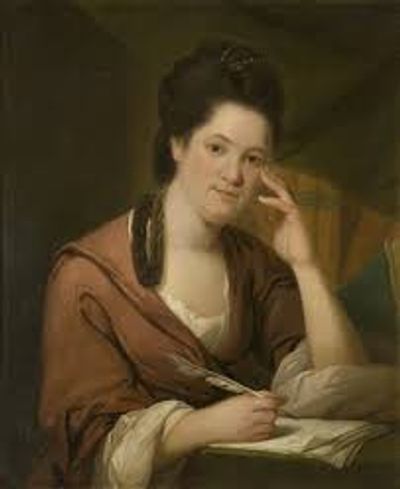
Hannah More - at the centre of the anti-slavery movement
Hannah More (1745-1833) was a poet, playwright, educator and anti-slavery campaigner, who was the most influential female philanthropist of her day. Seen by some as an early feminist, and others as an anti-feminist, she remains a controversial figure.
More was born in Bristol - one of five sisters whose father was a Schoolmaster. Together with her sisters, she opened a successful school for young women in Bristol, where the plays she wrote for school performances brought her to the attention of Samuel Johnson and David Garrick. She then pursued an extraordinarily successful literary career in London, socialising with fellow members of the Blue Stocking Society. In the 1790s, More became profoundly involved with the group known as the Clapham Sect, which opposed slavery. Hannah More helped to give the movement a public voice and in 1788 wrote ‘Slavery, a poem’ to coincide with the parliamentary campaign for abolition. More published pamphlets and helped to organise sugar boycotts.
The anti-slavery campaigners had a revolutionary aim - challenging the entrenched system of slavery. Despite women’s roles in politics being proscribed, Hannah More was undoubtedly an important contributor to the campaign, using her acknowledged writing ability to try to influence public opinion.
However, her activism and social dynamism was engaged in a counter-revolutionary direction in response to the French Revolution. The British establishment was deeply worried about the spread of revolutionary thinking from writers such as Thomas Paine. She was tasked to persuade the masses against radicalism by means of patriotic pamphlets. After her very successful tract ‘Village Politics’, she wrote fifty further ‘Cheap Repository Tracts’ which sold millions of copies. More’s activism also included campaigns for the education and welfare for the poor, funded by her publishing success. Encouraged by her dearest friend William Wilberforce she established 12 schools across Somerset and set up friendly societies for women’s welfare.
Her undoubted achievements led to a great deal of criticism. Henry Hunt, furious at her social conservatism, wrote a near-libellous piece attacking More as an unmarried woman, implying More’s morals ‘were a mere cloak to cover certain practices’ and her religious faith was mocked by others who called her ‘that old Bishop in petticoats’. Despite her own status and activism, her later writings advocated female education but with limited public roles for women in society – opinions which became highly unfashionable as the campaign for women’s rights developed.
The historian David Olusoga has pointed out that many of the campaigners against slavery have been minimised from its history - Hannah More is a case in point. Revolutionary and reactionary, examining her life and work reveals a woman of contradiction and complexity with an important impact on the Age of Revolution. In Nailsea we know her for her work opening the school here, revolutionising education in Nailsea and widening it to a large section of the community; both for adults and children, but her work and activism had a huge impact beyond this area.
A brief history of nailsea tithe barn
The Beginning of the Tithe Barn
The Beginning of the Tithe Barn

The Tithe Barn is thought to originate from 1480. There was a hamlet of 28 subsistence farmers recorded in the area in Doomsday Book of 1086.
As early as the 14th century the community was large enough to need a church and Holy Trinity was built. The Tithe Barn adjoins the Church on one of the highest points of ground, overlooking the flat and boggy surrounding moors.
Medieval Middle Ages
The Beginning of the Tithe Barn
Tithes were a payment in kind (one-tenth of the produce of a land holding, paid to support the local rector) until the system was changed to a monetary payment, under the Tithe Commutation Act 1836.
Coal mining flourished locally for some 400 years. Documents report that in 1507 Nailsea coal was being sold in nearby Yatton for the firing of lime kilns. The early shallow bell pits were replaced in the mid nineteenth century with deep mines.
Victorian Times
Hannah and Martha More first visited Nailsea in 1791 and were shocked by the level of poverty, depravity and lack of education they encountered amongst the industrial workers. They persuaded the Church to provide housing for a schoolmaster and mistress of their choosing, as well as additional space for their Sunday School. The house was thought to be Glebe Cottage, next to the Nailsea Tithe Barn which was also extended in its use as a school for the education of the children of the working class.
Early 20th Century
Early 20th Century
The school was still operating as Nailsea Parochial School in the 1900s. In 1923 it became the local Secondary School, often called Old Church, until Backwell Secondary Modern was built in 1953 and children were bused there. However, it retained an infant class alongside the Secondary School pupils so that the youngest children did not have to walk far to the other schools in the vicinity.
World War ll
Early 20th Century
World War ll
A class of children from London was evacuated to Nailsea during the war. They alternated lessons mornings and afternoons with the local pupils. Many former pupils have recorded their memories of how hard life was in the war and immediate post-war period.
Modern Times
Early 20th Century
World War ll
The class of '53 were the last Secondary School pupils. In 1963 the Tithe Barn became Hannah More Infant School. However, in 1972 the new Hannah More Infant School opened and the Barn became an annexe to Grove Junior School. It continued until 1985. It then became the Grove Day Centre run by Social Services for people with learning disabilities until it closed in 1998. A campaign to save the Tithe Barn from developers started in 1999.